 foundation
Separate Observation from Inference
Document raw facts in one column, interpretations in another; never mix them.
⏱ 5m⚡ low
Trace Integrity
Common Myth
Smart people are naturally good at avoiding bias. Intelligence protects against cognitive contamination.
Mechanism
Click a system to explore its habits

Trace Integrity
Protect raw data from contamination. Separate observation from inference. Use Linear Sequential Unmasking to prevent bias cascade.

Negative Space Reasoning
See what isn't there. Correct for survivorship bias. Detect temporal lacunae, pronoun drops, and the manufactured absence of adversarial environments.
Chain-of-Custody Memory
Maintain an audit trail of your own cognition. Log decisions before outcomes. Tag beliefs with sources. Calculate your calibration.
Trace Integrity
The protection of raw data from cognitive contamination, ensuring observations remain untainted by premature conclusions.
Linear Sequential Unmasking (LSU)
A protocol where evidence is analyzed blind before reference samples are revealed, preventing circular reasoning.
Survivorship Bias
The error of drawing conclusions only from data that 'survived' a selection process, ignoring what failed or disappeared.
Temporal Lacuna
A gap in a narrative, often bridged by phrases like 'later on,' where critical events may be hidden.
Chain of Custody
The chronological documentation of how a belief was formed, what evidence was used, and when confidence changed.
Brier Score
A mathematical measure of probabilistic prediction accuracy, revealing chronic overconfidence or underconfidence.
Double Crux
A method for resolving disagreement by finding the specific belief that, if changed, would change both parties' minds.
Cognitive Contamination
When an analyst's interpretation is swayed by contextually irrelevant information, often beneath conscious awareness.
Week 1: Install the Clean Room
Start with Foundation habits that separate observation from inference. Learn to shield from hot takes and log confidence before comparison.
Week 2: Protect Your Traces
Master the Trace Integrity system. Practice Linear Sequential Unmasking and information sequencing by bias power.
Week 3: See the Invisible
Develop Negative Space Reasoning. Learn to detect survivorship bias, temporal lacunae, and linguistic markers of omission.
Week 4: Build Your Audit Trail
Establish Chain-of-Custody Memory. Start your decision journal, tag beliefs with sources, and assign probabilistic confidence.
First Investigation: Apply the Full Protocol
Run the Investigation Protocol playbook on a real decision. Combine all three systems into a single analytical workflow.
Find a Specific Technique
Search for habits related to specific forensic techniques like pronoun analysis, Benford's Law, or the Crystal Ball method.
Browse the Full Deck
Clear all filters and explore the complete habit library.
Encounter New Information
T+0A report, claim, or dataset arrives. Before reading summaries or opinions, you enter the clean room.
Blind Analysis Phase
T+5mExamine raw data in isolation. Document observations in one column, inferences in another. Log confidence levels.
Negative Space Scan
T+15mAsk: What's missing? What filter generated this data? Where are the temporal gaps? What would I expect to see if I'm wrong?
Sequential Unmasking
T+20mNow reveal context, opinions, and reference samples. Compare your blind analysis to the proposed narrative.
Revision Audit
T+25mIf your view changes, document exactly why. Log the decision with probabilistic confidence and source tags.
Chain of Custody Sealed
T+30mThe analysis is complete. Your decision journal entry is locked. Future you can audit this moment without hindsight contamination.
"Every contact leaves a trace. In the cognitive realm, every exposure to information—whether relevant or irrelevant—leaves a trace that alters the observer's perception.
Progression
Foundation
Install the Operating System — Separate observation from inference. Shield from hot takes. Start a decision journal. Tag beliefs with sources.
Growth
Develop the Protocols — Practice LSU. Sequence information by bias power. Map temporal lacunae. Apply the True Rejection test. Steel-man arguments.
Mastery
Calibrate the Instrument — Run adversarial verification. Apply Benford's Law. Calculate Brier scores. Conduct Double Crux sessions.
Titan
Build the Infrastructure — Design personal LSU protocols. Build a failure library. Publish prediction track records. Conduct cognitive M&M reviews.
Habits
40cards
Core Systems
3pillars
Playbooks
5protocols
Progression Tiers
4levels
Curated sequences of habits designed to be practiced together. Click a playbook to see its cards in the deck below.
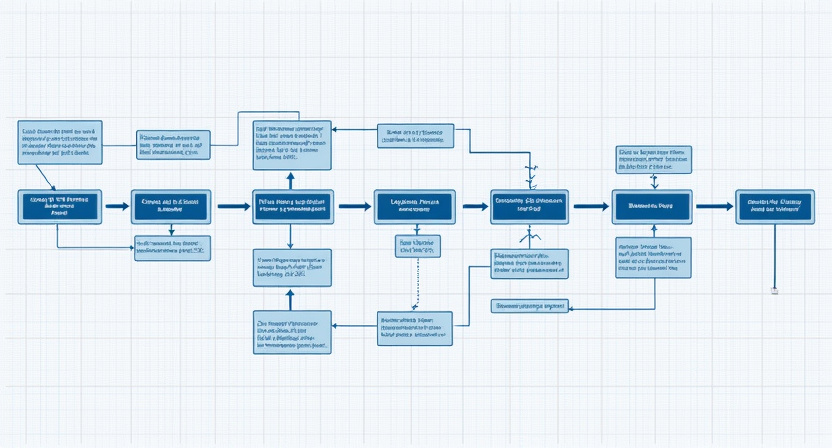
Full forensic analysis workflow: blind examination, negative space scan, sequential unmasking, and revision audit.
+8 more habits
Validate claims and trace beliefs back to credible origins. Break the chain of hearsay.
+2 more habits
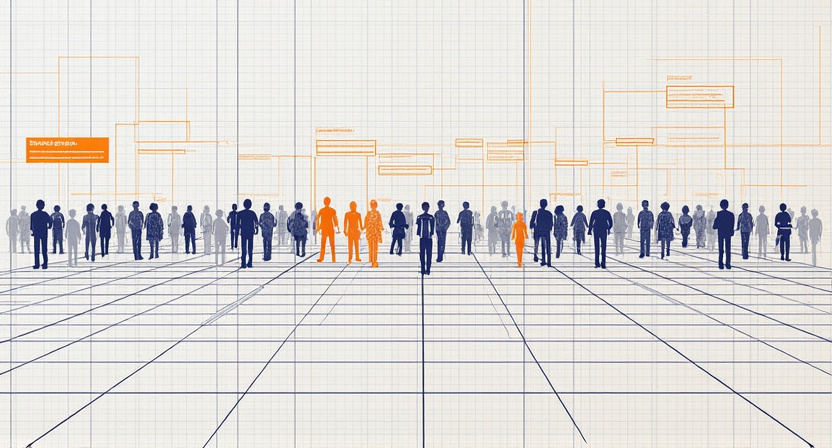
Linguistic and behavioral markers of omission, distancing, and manufactured absence.
+3 more habits

Monthly review of prediction accuracy, confidence calibration, and cognitive failure patterns.
+2 more habits

Full protocol for irreversible decisions: blind analysis, adversarial verification, and diagnostic timeout.
+4 more habits
Challenges to accelerate your transformation. Click a quest to see its target cards.
Clean your cognitive lens by separating facts from interpretations and isolating raw data from external influence.
"The scene is contaminated. Your first task is to secure the perimeter and stop the leaks."
Master the art of reasoning from absence, identifying linguistic evasion, and mapping what isn't being said.
"Truth is rarely found in the signal. It hides in the silence, the gaps, and the selective omissions."
Perform a deep-dive reconstruction of a failed prediction to isolate the exact moment of cognitive contamination.
"The error is the evidence. To master the mind, you must dissect its failures with clinical precision."
40 habits across 3 core systems
foundation foundation
 foundation
 foundation
 growth
 growth
 growth
 mastery
 mastery
 titan
titan foundation
 foundation
 foundation
 growth
 growth
 growth
 growth
 mastery
 mastery
 titan
titan foundation
 foundation
 foundation
 growth
 growth
 growth
 growth
 mastery
 mastery
 mastery
 titan
titan foundation
 growth
 growth
 mastery
 foundation
 growth
 titan
titan titan
titan titan
titanExternal reading that informed this stack.
Cognitive Bias in Forensic Science
National Academy of Sciences
ncbi.nlm.nih.gov
Linear Sequential Unmasking: A Research Protocol
Journal of Forensic Sciences
onlinelibrary.wiley.com
Survivorship Bias in World War II Bomber Analysis
Abraham Wald, Statistical Research Group
ams.org
Analysis of Competing Hypotheses (ACH)
CIA Center for the Study of Intelligence
cia.gov
Cognitive Forcing Strategies in Clinical Diagnosis
Academic Emergency Medicine
pubmed.ncbi.nlm.nih.gov
The Ethic of Hand-Washing: Epistemic Hygiene
LessWrong Sequences
lesswrong.com
Forensic Statement Analysis: Detecting Deception
FBI Law Enforcement Bulletin
leb.fbi.gov
Benford's Law in Fraud Detection
Journal of Accountancy
journalofaccountancy.com
Cross-disciplinary habit systems designed to layer on top of this protocol.
Interrupt compulsive screen loops and restore deep focus using notebooks, physical friction, and analog rituals.
Turn recurring responsibilities into frictionless, automated checklists that run reliably every time.
The Mark Rober engineering method: rapid prototyping, viral mechanisms, and creative storytelling.
Your personal binder of stashed cards and habit stacks.