Protocol

The Calm Nervous System Operator

Calm is not a vibe. Calm is a baseline you can engineer: breath, cues, release, boundaries, shutdown.

The Calm Nervous System Operator

Does this sound familiar?

  • You finish meetings with adrenaline still running 30 minutes later
  • Your jaw and shoulders stay tight even when nothing is happening
  • You try to recover with scrolling, then feel wired at night
  • You use caffeine to patch the dip, then pay for it at bedtime
  • Your sleep onset is inconsistent even when you 'do everything right'
Old Way
  • Run hot all day and hope the night fixes it
  • Stay in input mode until lights-out
  • Use stimulants to override signals
  • Treat every ping as a priority
New Way
  • Use breath to downshift on demand
  • Use light timing to stabilize the day
  • Use temperature as a clean state change
  • Run shutdown cues that make sleep likely
Myth

Common Myth

If I were truly calm, I’d feel relaxed all the time.

Mechanism

The 5 Operating Systems

Click a system to explore its habits

Breath Control

Breath Control

Use cadence and exhale bias to reduce arousal quickly and maintain calm-alert focus.
Thermal & Light Cues

Thermal & Light Cues

Use daylight timing and temperature shifts to lock the energy curve and support sleep pressure.

Somatic Release

Somatic Release

Release stress where it hides: jaw, shoulders, hands, posture.

Cognitive Boundaries

Cognitive Boundaries

Reduce vigilance by constraining inputs and enforcing buffers.

Sleep Shutdown

Sleep Shutdown

Build a repeatable wind-down sequence that makes sleep onset predictable.

Progression

Habit Tiers

Tier 1

Foundation

Under 2 minutes. Small cues that reliably downshift state: exhale bias, jaw release, dim lights, phone out of reach.

Tier 2

Growth

5–15 minutes. Skill-building sessions: coherent breathing, legs-up-the-wall, circadian walks, message windows.

Tier 3

Mastery

20–60 minutes. Full resets: CO₂ tolerance training, progressive muscle relaxation, consistent wind-down circuits.

Tier 4Peak

Titan

Acute tests. Use sparingly. Always pair with recovery cues so challenge doesn’t become chronic activation.

When It Happens

  • Morning: Set the baseline

    0–60m after waking

    Get outside for light, keep breath nasal, and start work without spinning up the system.

  • Before stress: Pre-regulate

    2–10m

    Run box breathing or coherent cadence before you enter high-stakes conversations.

  • After stress: Downshift fast

    1–5m

    Physiological sigh + exhale bias + jaw/shoulder release. No analysis required.

  • Afternoon: Prevent stacking

    2–5m

    Add buffers between meetings, walk outside, avoid late caffeine patches.

  • Evening: Shut it down

    60m pre-bed

    Dim lights, remove phone, brain dump, screen-off ramp, and run the wind-down circuit.

Getting Started

Step01

Week 1: Stabilize the baseline

Pick 3 Foundation habits and make them automatic. The Operator baseline is built from small, repeated cues.

Step02

Week 2: Add recovery speed

Add one Growth habit that directly shortens recovery after stress (coherent breathing, buffers, legs-up-the-wall).

Step03

Week 3: Install the shutdown

Build a repeatable nighttime sequence. Your day is only as good as your sleep onset reliability.

Step04

Week 4+: Stress-test deliberately

Attempt Challenge habits sparingly. The test is composure, then recovery, not suffering.

Frequently Asked Questions

Calm Nervous System Operator

Protocol Playbooks

Curated sequences of habits designed to be practiced together. Click a playbook to see its cards in the deck below.
Post-Meeting Downshift
6 cards

Post-Meeting Downshift

Stop carrying adrenaline into the next hour. Downshift in under 5 minutes.

Label the State
Do Two Physiological Sighs
Drop Your Shoulders

+3 more habits

Calm-Alert Morning Ramp
6 cards

Calm-Alert Morning Ramp

Start work without spinning up. Stabilize baseline and attention in the first hour.

Get Morning Light Outside
Breathe Through Your Nose
Work with One Tab

+3 more habits

Nighttime Sleep Onset Protocol
7 cards

Nighttime Sleep Onset Protocol

Make sleep likely by removing stimulants, reducing input, and running the same cues in the same order.

Set a Caffeine Cutoff
Dim Your Lights After Sunset
Park Your Phone Outside Bedroom

+4 more habits

Neck + Jaw Tension Flush
5 cards

Neck + Jaw Tension Flush

Clear tension fast so it doesn’t accumulate into headaches, irritability, or insomnia.

Unclench Your Jaw
Drop Your Shoulders
Relax Your Hands

+2 more habits

High-Stress Event Recovery
5 cards

High-Stress Event Recovery

When stress spikes hard, run a controlled test then immediately restore baseline.

Hold a Calm Breath Under Stress
Discharge Stress with Shaking
Run a 2-Minute Cold Finish

+2 more habits

Quests

Challenges to accelerate your transformation. Click a quest to see its target cards.

Initiation

The Operator’s Initialization

Establish baseline stability by practicing foundational breathwork, light exposure, and somatic release protocols for 7 days.

"The Reactive Firefighter burns out; the Operator prepares. Install the foundational code of a regulated nervous system."

7 Foundation tier habits in 7 days
7 cards
View Quest Cards
System Mastery

The Sovereign Breather

Master the full spectrum of Breath Control, from physiological sighs to advanced CO2 tolerance and stress-hold techniques.

"Breath is the only manual override for your autonomic systems. Take the controls and never let go."

Complete Breath Control system
7 cards
View Quest Cards
Titan Trial

The Fortress Protocol

Execute a 4-hour no-input deep work sprint and maintain autonomic composure through a 2-minute cold finish.

"Silence the external noise and embrace the thermal stress. This is where the Operator achieves total system dominance."

Complete Titan tier
2 cards
View Quest Cards

The Full Deck

35 habits across 5 core systems

Systems:
Playbooks:
Do Two Physiological Sighsfoundation

Do Two Physiological Sighs

Double inhale through nose, long slow exhale; repeat twice; 30 seconds total.
30sLow
Breath Control
Extend Your Exhalefoundation

Extend Your Exhale

Inhale 3 seconds, exhale 6 seconds; 6-8 cycles; parasympathetic shift activated.
60sLow
Breath Control
Breathe Through Your Nosefoundation

Breathe Through Your Nose

Lips closed, tongue on palate, silent nasal breathing; first 2 minutes of work block.
2 minLow
Breath Control
Run Box Breathinggrowth

Run Box Breathing

Inhale 4, hold 4, exhale 4, hold 4; all phases equal; 8 minutes before high-stakes events.
8 minMedium
Breath Control
Practice Coherent Breathinggrowth

Practice Coherent Breathing

5 seconds in, 5 seconds out; nasal-only; no breath holds; steady cadence for 10 minutes.
10 minMedium
Breath Control
Train CO₂ Tolerance on a Walkmastery

Train CO₂ Tolerance on a Walk

Easy walk; exhale and hold for 3-5 steps; resume nasal breathing; repeat lightly.
20 minHigh
Breath Control
Hold a Calm Breath Under Stresstitan

Hold a Calm Breath Under Stress

Normal exhale, hold 5-10 seconds, resume with long exhale; 6 repetitions; no panic.
2 minHigh
Breath Control
Get Morning Light Outsidefoundation

Get Morning Light Outside

Outdoors within 60 minutes of waking; eyes open; no sunglasses; avoid direct sun stare.
5 minLow
Thermal & Light Cues
Rinse Your Face Coldfoundation

Rinse Your Face Cold

Cold water on face and around eyes for 15-30 seconds; follow with extended exhale.
30sLow
Thermal & Light Cues
Dim Your Lights After Sunsetfoundation

Dim Your Lights After Sunset

Overheads lowered; lamps only; warm color temperature; screen brightness reduced.
1 minLow
Thermal & Light Cues
Take a Midday Daylight Walkgrowth

Take a Midday Daylight Walk

10 minutes outside; no podcasts; wide vision; nasal breathing only; clears cognitive residue.
10 minMedium
Thermal & Light Cues
Finish Your Shower Coolgrowth

Finish Your Shower Cool

30-120 seconds cool water at end; breath kept steady; only as cold as you can regulate.
2 minMedium
Thermal & Light Cues
Lock a Sleep-Wake Anchormastery

Lock a Sleep-Wake Anchor

Wake time fixed 6 days/week; alarms, calendar blocks, and shutdown reminder set.
2 minHigh
Thermal & Light Cues
Run a 2-Minute Cold Finishtitan

Run a 2-Minute Cold Finish

2 minutes cool water; no hyperventilation; immediately followed by 60-second extended exhale.
2 minHigh
Thermal & Light Cues
Unclench Your Jawfoundation

Unclench Your Jaw

Tongue on palate, lips closed, molars separated; one long exhale; baseline tension dropped.
30sLow
Somatic Release
Drop Your Shouldersfoundation

Drop Your Shoulders

Inhale and shrug up, exhale and drop heavy; repeat twice; protective posture interrupted.
20sLow
Somatic Release
Relax Your Handsfoundation

Relax Your Hands

Hands opened, fingers spread, grip softened; followed by extended exhale.
30sLow
Somatic Release
Do Legs-Up-the-Wallgrowth

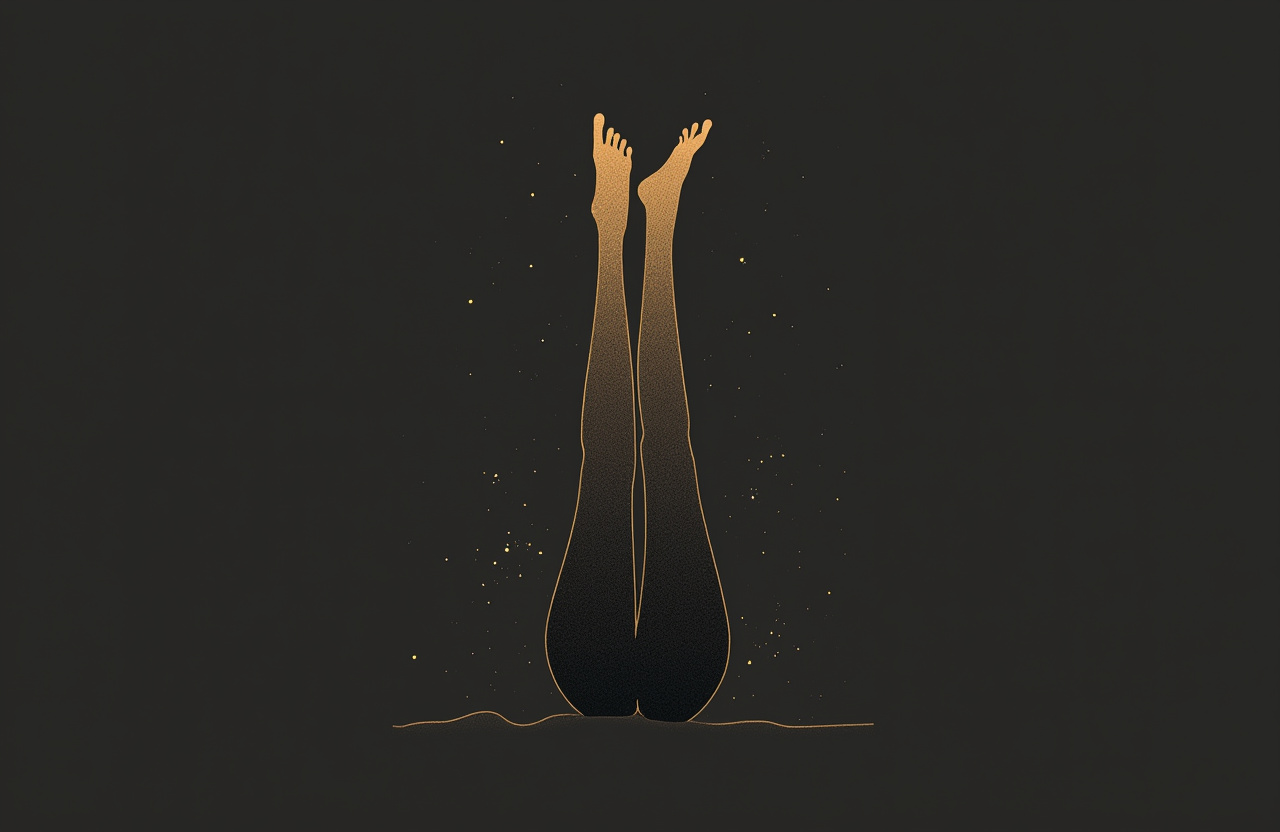
Do Legs-Up-the-Wall

Hips near wall, legs up; quiet dim environment; slow breathing; 10 minutes.
10 minMedium
Somatic Release
Hum for Vagal Tonegrowth

Hum for Vagal Tone

Nasal inhale, hum on long exhale; 10-15 cycles; gentle vocal vibration for downregulation.
3 minMedium
Somatic Release
Run Progressive Muscle Relaxationmastery

Run Progressive Muscle Relaxation

Tense 5 seconds, release 10 seconds; head-to-toe sequence; release longer than tense.
25 minHigh
Somatic Release
Discharge Stress with Shakingtitan

Discharge Stress with Shaking

Light controlled shaking of arms and legs for 60 seconds; stand still; physiological sigh.
60sHigh
Somatic Release
Label the Statefoundation

Label the State

State named before intervention chosen: 'This is activation'; then select breath or thermal cue.
15sLow
Cognitive Boundaries
Close One Open Loopfoundation

Close One Open Loop

Under 2 minutes: do it now; over 2 minutes: write next action and when; then return to focus.
2 minLow
Cognitive Boundaries
Work with One Tabfoundation

Work with One Tab

Everything closed; one active tab/app only; all else parked in notes list.
1 minLow
Cognitive Boundaries
Batch Messages into Two Windowsgrowth

Batch Messages into Two Windows

Two windows on calendar; DND enabled outside them; team informed of schedule.
10 minMedium
Cognitive Boundaries
Schedule Recovery Buffersgrowth

Schedule Recovery Buffers

5 minutes added after meetings; physiological sigh plus shoulder drop in buffer.
5 minMedium
Cognitive Boundaries
Run a 45-Minute Focus Blockmastery

Run a 45-Minute Focus Block

One task, one surface, 45 minutes; no inbox; ends with 60-second extended exhale.
45 minHigh
Cognitive Boundaries
Execute a 4-Hour No-Input Sprinttitan

Execute a 4-Hour No-Input Sprint

Food/water prepped; stakeholders informed; 50/10 cycles; cold rinse or sigh during breaks.
4hHigh
Cognitive Boundaries
Set a Caffeine Cutofffoundation

Set a Caffeine Cutoff

8 hours before target bedtime; calendar reminder set; switch to water, decaf, or herbal.
1 minLow
Sleep Shutdown
Park Your Phone Outside Bedroomfoundation

Park Your Phone Outside Bedroom

Phone charged in another room; analog alarm or dedicated device used instead.
30sLow
Sleep Shutdown
Take a Warm Shower to Downshiftfoundation

Take a Warm Shower to Downshift

Warm water, warm low lights; optional 30-second cool finish if overheating; clear transition cue.
10 minLow
Sleep Shutdown
Do a 10-Minute Brain Dumpgrowth

Do a 10-Minute Brain Dump

Everything written down; top 3 for tomorrow picked; notebook closed; rumination externalized.
10 minMedium
Sleep Shutdown
Run a Screen-Off Rampgrowth

Run a Screen-Off Ramp

Screens off, lamps on; paper reading, light stretching, or extended exhale; 20 minutes.
20 minMedium
Sleep Shutdown
Execute a 60-Minute Wind-Down Circuitmastery

Execute a 60-Minute Wind-Down Circuit

Same order every night: dim lights → phone parked → brain dump → legs-up or coherent breathing → bed.
60 minHigh
Sleep Shutdown
Recover from a Bad Night Without Panictitan

Recover from a Bad Night Without Panic

Morning light first; no naps after 3pm; caffeine cutoff enforced; early wind-down started.
15 minHigh
Sleep Shutdown

My Stash

0 items saved

📭

No items unfiled

Click the bookmark icon on any item to save it here